
SIAT Research
-
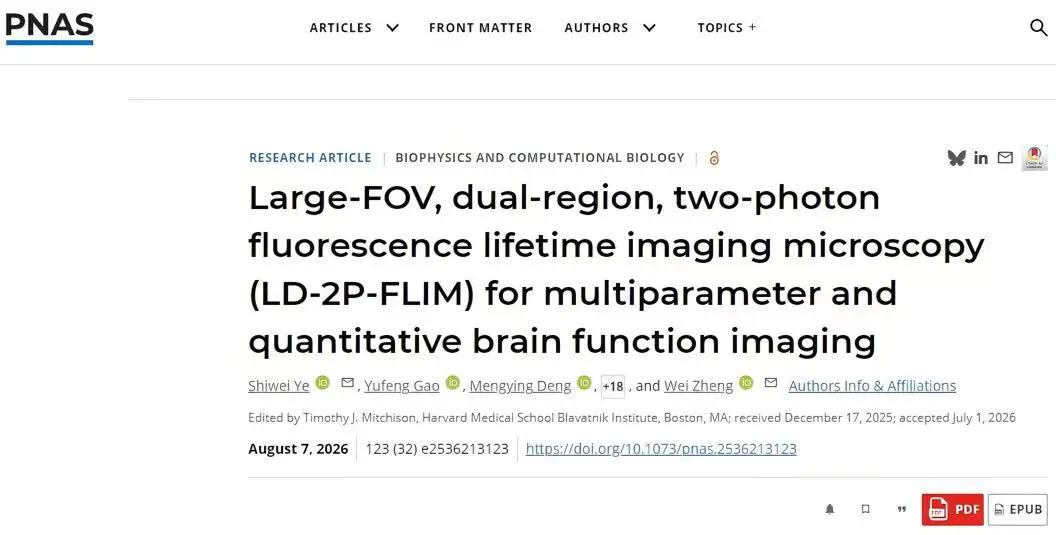 Sep 02, 2026High-throughput Two-photon Microscope Developed for Multiparameter and Quantitative Brain Function ImagingIn a study published in PNAS, a team led by Prof. ZHENG Wei and Prof. YE Shiwei from the Shenzhen Institutes of Advanced Technology of the Chinese Academy of Sciences developed a large-FOV, dual-re... Large-scale recording of multiple dynamic behaviors and quantitative neurochemical concentrations with high spatiotemporal resolution is critical to understand complex brain functions. Two-photon m...
 -
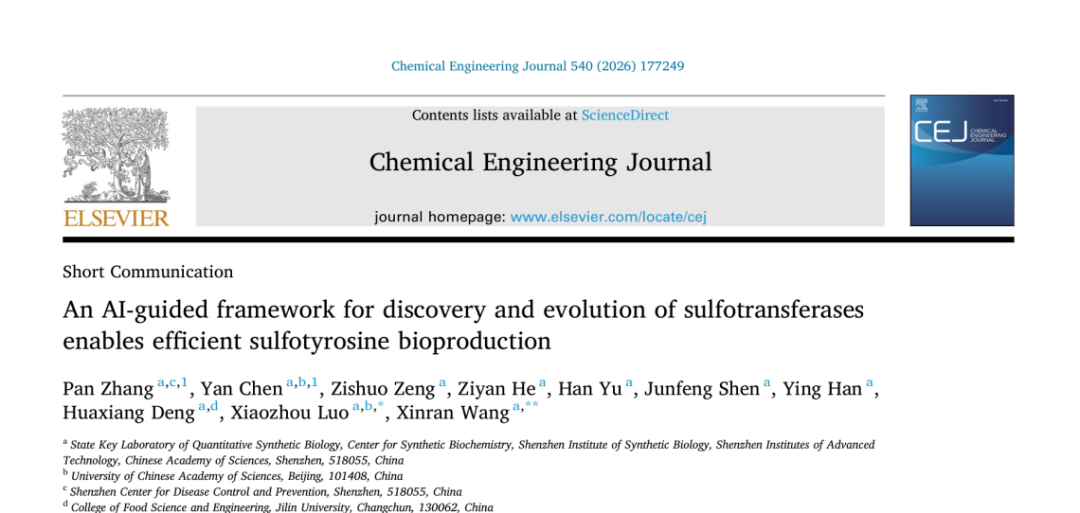 Sep 02, 2026AI-guided Enzyme Mining Enables Efficient Sulfotyrosine BiosynthesisRecently, a research team led by Prof. LUO Xiaozhou and Associate Prof.WANG Xinran from the Shenzhen Institutes of Advanced Technology (SIAT), Chinese Academy of Sciences, developed an AI-guided fr... Discovering efficient enzymes for newly designed biosynthetic pathways remains a major challenge in synthetic biology. Large enzyme families often contain thousands of poorly characterized sequence...
 -
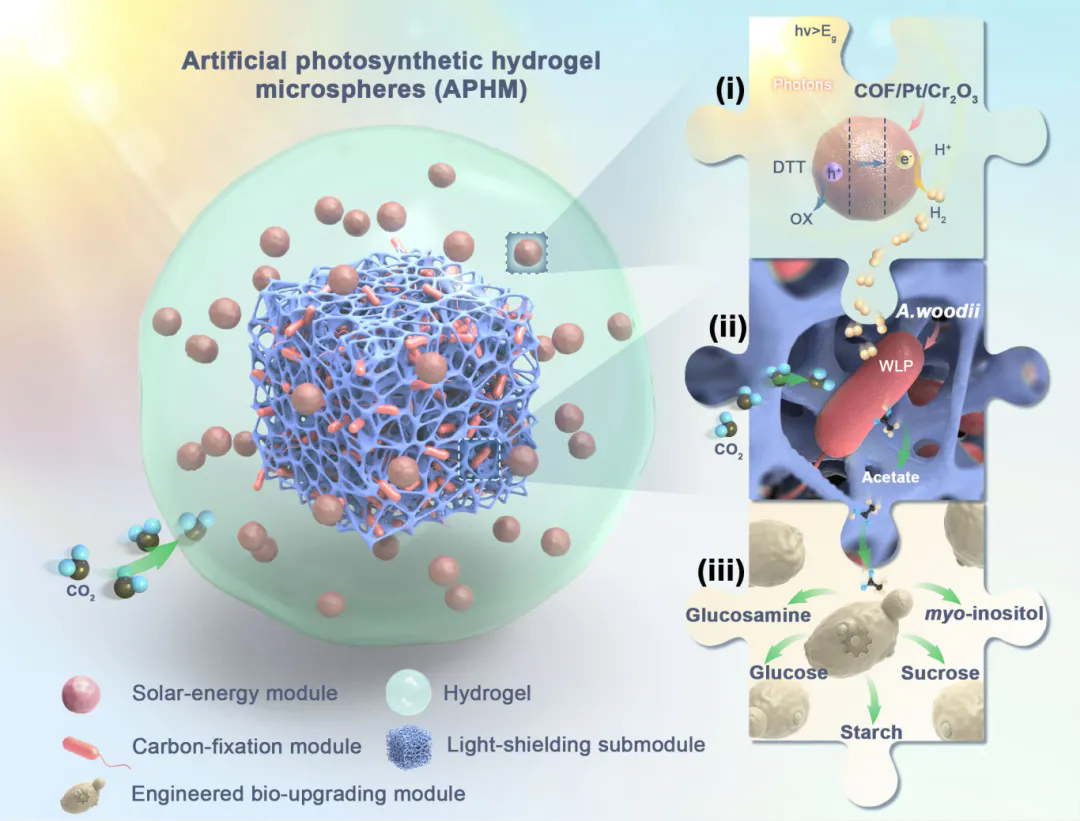 Aug 27, 2026Artificial Photosynthetic Hydrogel Microspheres Enable Programmable CO₂ ValorizationIn a study published in Journal of the American Chemical Society, a team led by Profs. WANG Bo and YU Tao from the Shenzhen Institutes of Advanced Technology of the Chinese Academy of Sciences deve... Converting carbon dioxide (CO2) into glucose, myo-inositol, sucrose, starch and other valuable products has been considered an achievable process mainly through plant photosynthesis. Combining phot...
 -
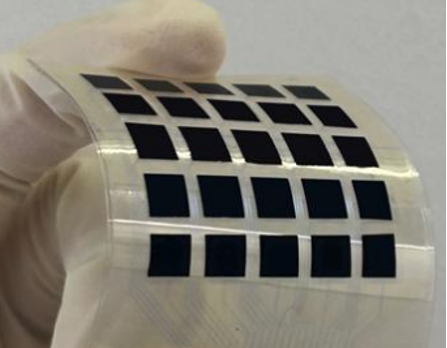 Aug 12, 2026Homologous Perception: Bio-Inspired Flexible Sensor Enables Co-Located, Synchronous Photoelectric and Pressure SensingSensing systems typically use separate photoelectric sensors for non-contact perception and pressure sensors for contact perception. Because these sensors are spatially separated and often acquire ... Sensing systems typically use separate photoelectric sensors for non-contact perception and pressure sensors for contact perception. Because these sensors are spatially separated and often acquire ...
 -
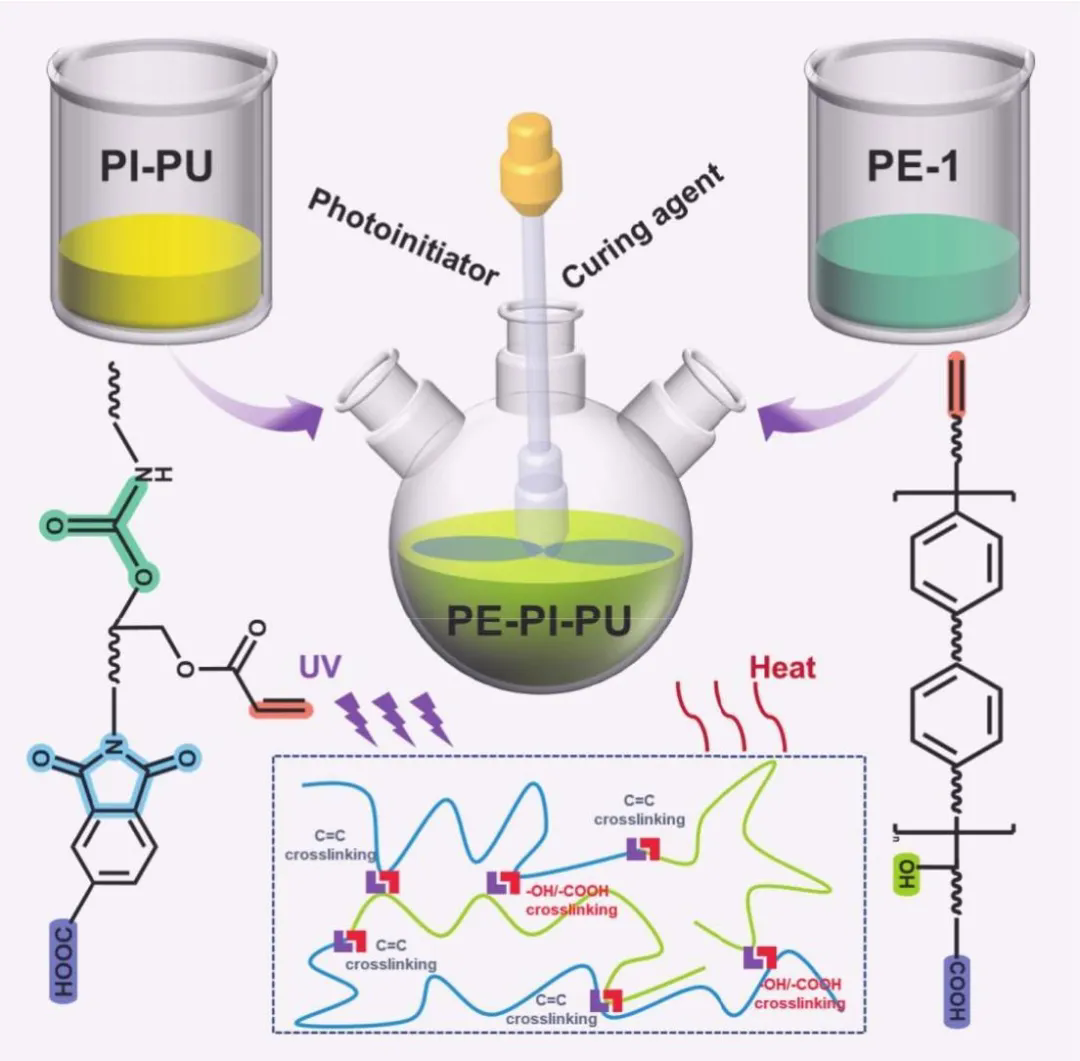 Jul 30, 2026From Molecular Design to Application-Ready Coating: SIEM's Hybrid Solder Resist Balances Thermal and Mechanical PerformanceA study published in Progress in Organic Coatings, a team led by SUN Rong from the Shenzhen Institutes of Advanced Technology, Chinese Academy of Sciences developed a novel polyurethane–imide olig... As electronic devices continue to advance toward greater integration, miniaturization and thinner designs, solder resist (SR) — a key protective material for IC substrates — faces increasingly de...
 -
 Jul 30, 2026Researchers Develop Programmable Living Textiles from Fungal MyceliumA team led by Dr. ZHONG Chao from the State Key Laboratory of Quantitative Synthetic Biology at the Shenzhen Institutes of Advanced Technology of the Chinese Academy of Sciences developed a flexibl... Fungal mycelium is a promising renewable material, but conventional processing generally eliminates the living activity that could support growth, repair, and environmental response.A team led by D...
 -
 Jul 15, 2026Cells Encode Information Through Time, Not Just Molecule LevelsFor decades, biologists assumed that cells transmit instructions mainly through the concentration of signaling molecules — the higher the level, the stronger the response. Yet more and more eviden... For decades, biologists assumed that cells transmit instructions mainly through the concentration of signaling molecules — the higher the level, the stronger the response. Yet more and more eviden...
 -
 Jul 09, 2026Novel CRISPR Transposase System Enables Precise Genome Editing of Gut Bacteria Within Complex Microbial CommunitiesBacteroides are the most abundant bacteria in the human gut, yet precisely editing their genomes remains difficult. Current tools rely on homologous recombination, which is inefficient in most Bact... Bacteroides are the most abundant bacteria in the human gut. Precisely editing their genomes remains difficult. Current tools rely on homologous recombination, which is inefficient in most Bacteroi...