
Profile
Chinese Academy of Sciences
Shenzhen Government
The Chinese University of Hong Kong
Introducing SIAT
Shenzhen Institutes of Advanced Technology (SIAT), Chinese Academy of Sciences, founded in 2006 in Shenzhen, China, is a national research institution affiliated with the Chinese Academy of Sciences (CAS) and jointly established by CAS, the Shenzhen Municipal Government, and The Chinese University of Hong Kong. As part of CAS’s strategic institutional and innovation deployment in the Guangdong–Hong Kong–Macao Greater Bay Area, SIAT comprises ten research institutes spanning AI, biomedical engineering, biomedicine, brain sciences, synthetic biology, and materials sciences. It ranks first among all 108 CAS institutes in the field of life and health sciences and ranks second in international cooperation. With a community of approximately 5,000 personnel, including roughly equal numbers of students and research staff, SIAT has established an integrated ecosystem that connects education, fundamental research, scientific infrastructure, technological innovation, and the translation of scientific advances into industrial and practical applications. Among its ten research institutes, the Institute of Synthetic Biology (SIAT-iSynBio) serves as a key platform for driving innovation in synthetic biology and related fields.
Institutional Leadership
View More
Research Units and Administration Systems









Affiliated Research Institutes:
focus on scientific and technological innovation in interdisciplinary fields around IBT

Department of General Affairs

Department of Research and Knowledge Transfer Services

Department of Science & Technology Development

Department of Education

Department of Human Resources

Department of Supervisory Auditing

Department of Finance and Assets

Department of Public Service Platform for Science and Technology

Department of Industry Cooperation and Innovation Development
Administration Departments:
Provide systematic support and services for S&T innovation.
Beijing
Shenzhen
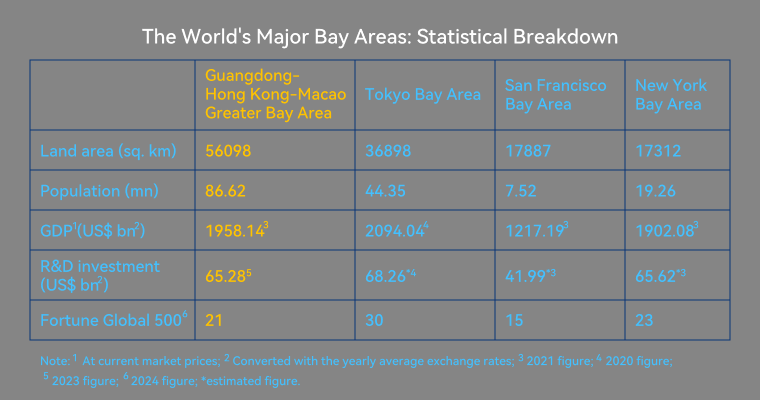
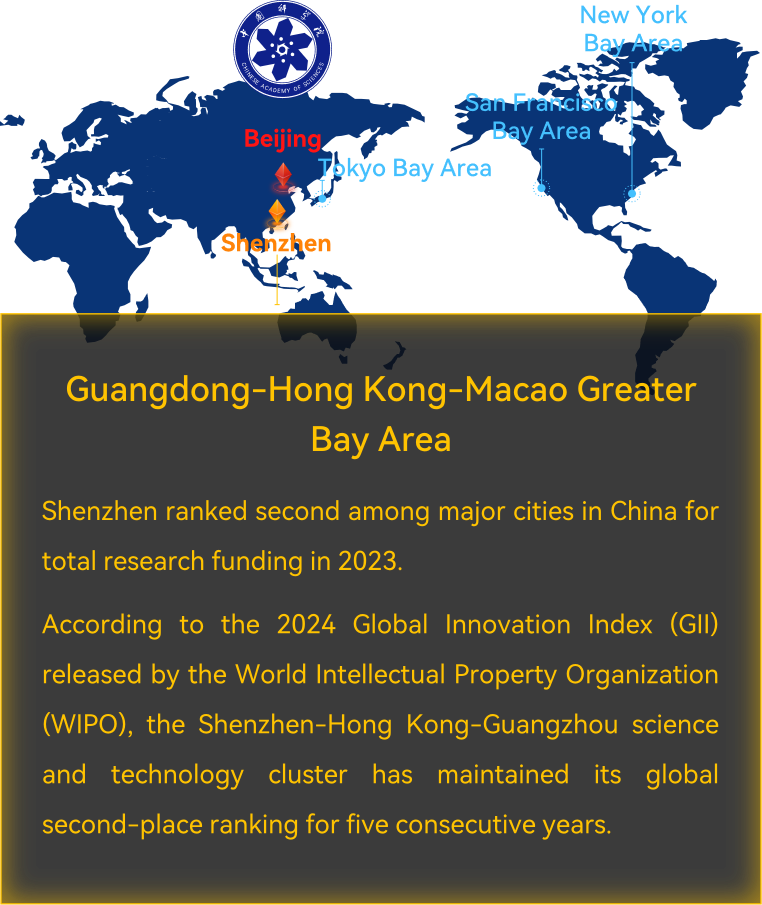
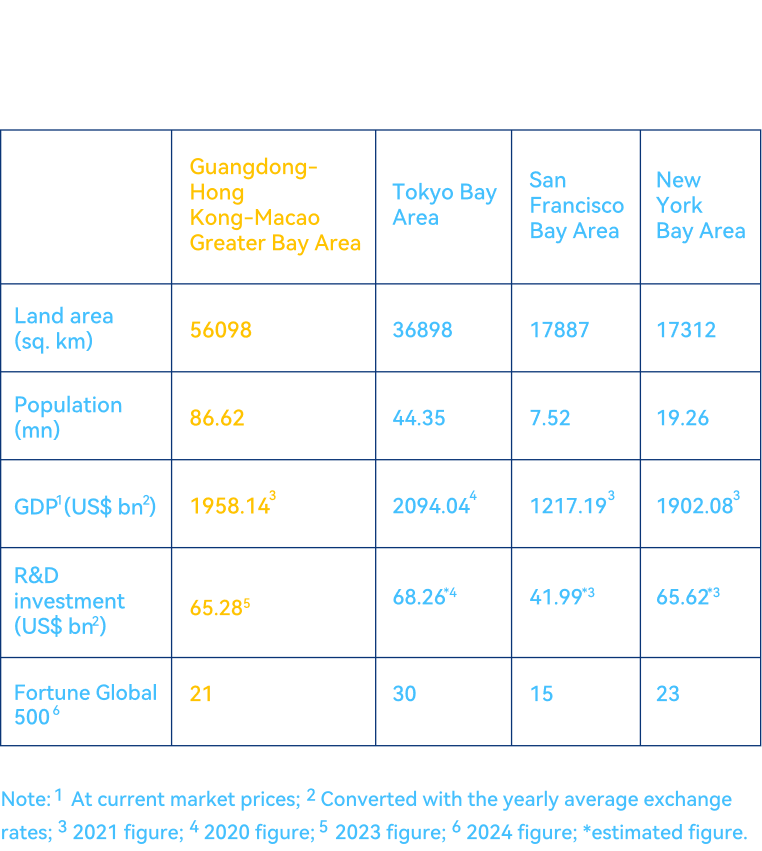
Guangdong-Hong Kong-Macao Greater Bay Area
Shenzhen ranked second among major cities in China for total research funding in 2023.
According to the 2024 Global Innovation Index (GII) released by the World Intellectual Property Organization (WIPO), the Shenzhen-Hong Kong-Guangzhou science and technology cluster has maintained its global second-place ranking for five consecutive years.
Tokyo Bay Area
San Francisco Bay Area
New York Bay Area
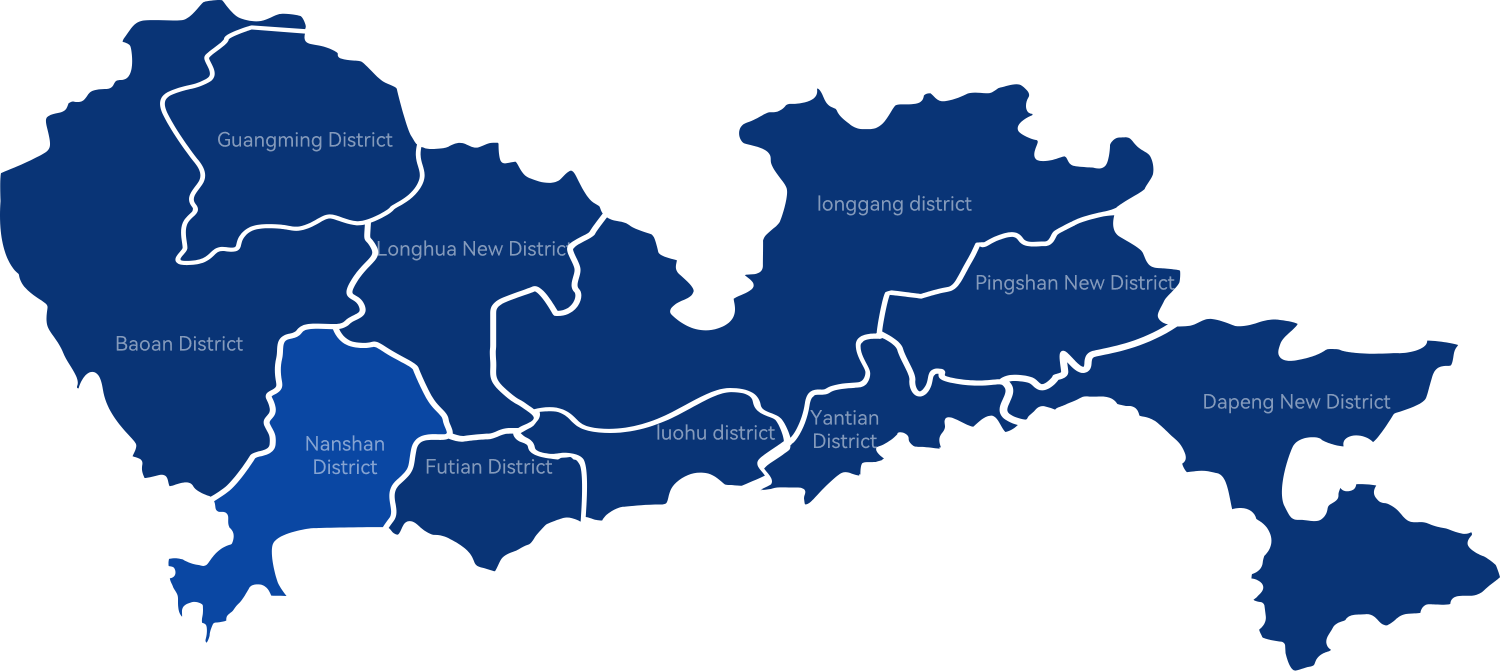
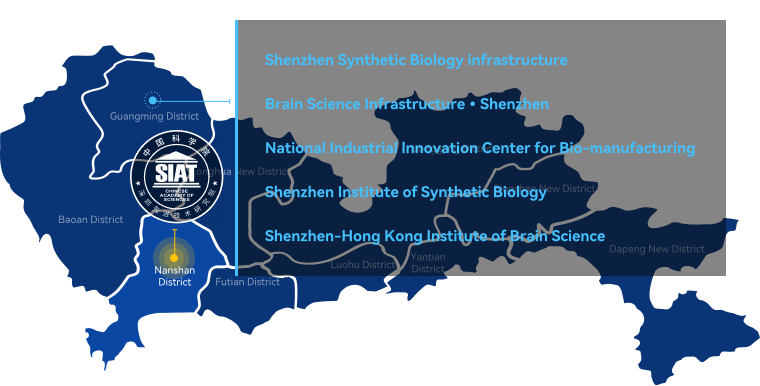
Nanshan District

Guangming District
Shenzhen Synthetic Biology infrastructure
Brain Science Infrastructure•Shenzhen
National Industrial lnnovation Center for Bio-manufacturing
Shenzhen Institute of Synthetic Biology
Shenzhen-Hong Kong Institute of Brain Science
-
 4935Personnel2612
Staff2323 Students -
 133National, provincial, municipal and CAS awards
 -
 20000+PublicationOver 400 published in CNS and its series
 -
 5CampusThe total value of all experimental instruments is 4.3 billion
 -
 18500Patent applications3709 PCT patents
 -
 40+International, Hong Kong and Macau China, joint laboratories
(Data as of June 12, 2026)